
Medical disclaimer: This article is for information only and does not replace the opinion of a qualified orthopaedic surgeon. Any decision about ACL reconstruction, meniscus repair or travelling abroad for surgery should be based on a personal medical assessment.
A torn anterior cruciate ligament or a meniscus injury on the pitch, the slopes or the trail often raises the same questions: what exactly will the surgeon do inside the knee, how long will the wait be, and can treatment abroad really be a safe shortcut back to sport? This guide explains the two most common knee procedures after a sports injury, then describes how a structured surgical journey abroad actually works, from the first remote consultation to the physiotherapy sessions once you are back home.
The core idea is simple: ACL reconstruction and meniscus repair are well-defined operations, and surgery abroad is not an improvised trip but a planned, step-by-step patient journey with coordinated follow-up.
What are ACL reconstruction and meniscus repair?
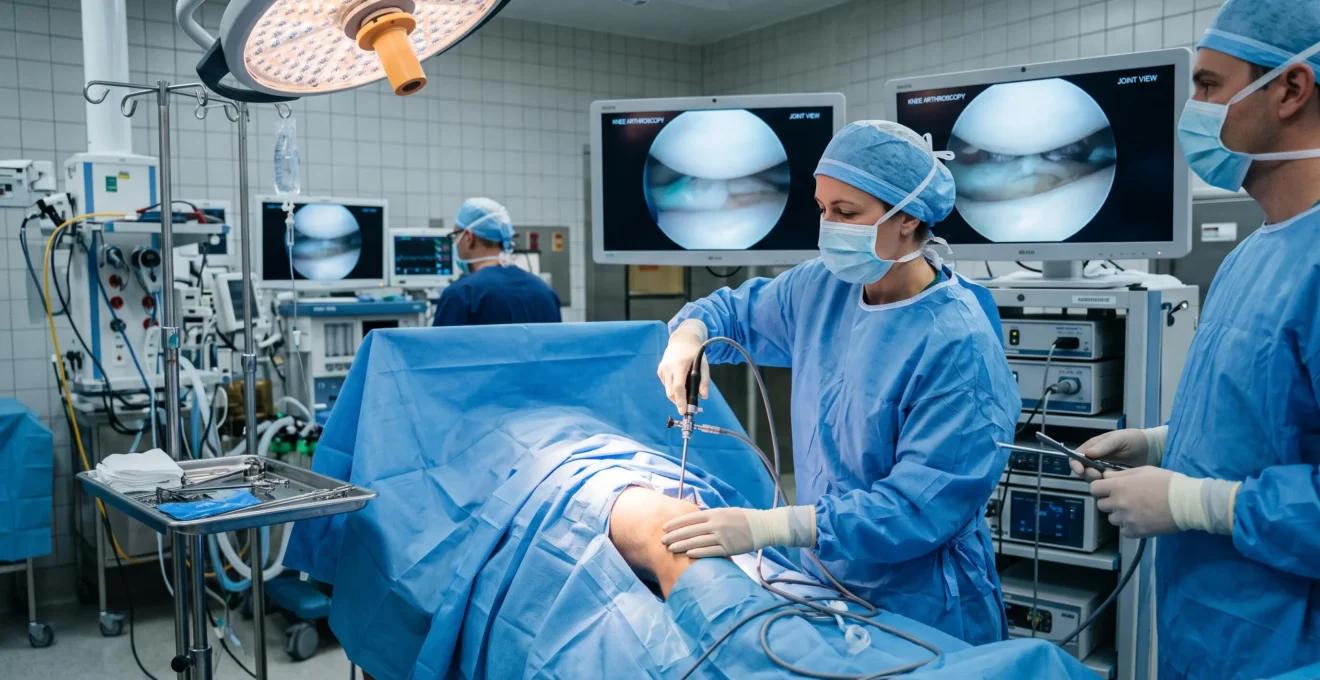
Direct answer: ACL reconstruction rebuilds the torn anterior cruciate ligament with a tendon graft, while meniscus repair stitches or preserves the knee’s cartilage shock absorber rather than removing it. Both are usually performed through arthroscopy, a keyhole technique using small incisions.
The anterior cruciate ligament (ACL) is one of the main stabilisers of the knee. When it ruptures, often during a pivoting movement in football, skiing or basketball, the joint can give way during sport. In a reconstruction, the surgeon does not simply sew the torn ligament back together: a graft, typically taken from one of the patient’s own tendons (hamstring or patellar tendon), is used to recreate a new ligament inside the knee.
The menisci are two C-shaped pieces of fibrocartilage that cushion the joint between the thigh and shin bones. A sports injury can tear a meniscus, sometimes together with the ACL. Modern practice favours repair (suturing the torn fragment) rather than removal whenever the tear is suitable, because preserving the meniscus helps protect the cartilage over the long term. According to the French HAS guidelines on ACL and meniscus treatment, promoting meniscal conservation and framing the indications for ACL reconstruction is a central principle of care for adults.
A typical scenario is a sprained knee during a twisting fall, with imaging showing a torn ACL and a meniscus lesion. In that case, the two procedures can be combined in a single arthroscopic operation, which limits the number of surgeries and the time off sport.
Why do athletes consider knee surgery abroad?
Active patients usually consider a knee operation abroad for three main reasons: waiting times at home, access to highly specialised knee surgeons, and a desire for a clear, coordinated patient journey rather than a fragmented pathway.
Long waiting lists are a frequent trigger. For a torn ACL combined with a meniscus tear, delaying surgery can increase instability, worsen a repairable meniscus lesion into one that must be partly removed, and push back the return to sport by several months. For a competitive or recreational athlete, each lost season has a real cost.
The second driver is expertise. ACL and meniscus surgery is a sub-specialty of orthopaedics. Experienced knee units in France, for example in Toulouse, perform these procedures as part of their everyday practice and routinely combine ACL reconstruction with meniscus repair in the same operation. Published French data show that ACL rupture is a very common injury: a prospective study in Orthopaedics & Traumatology: Surgery & Research describes near 100,000 ACL ruptures per year in France, which gives an idea of how much experience specialised teams accumulate.
The third factor is clarity. A well-organised international pathway sets out the schedule, the hospital stay, the physiotherapy plan and the follow-up before you commit, which directly addresses the anxiety of travelling for surgery.
Key reasons athletes look abroad
- Shorter time between injury and surgery, which can protect a repairable meniscus.
- Access to a knee-specialised surgical team with high procedure volumes.
- A structured journey with planned logistics and follow-up.
- Transparent, pre-agreed costs rather than open-ended bills.
What does a knee operation abroad involve step by step?
A knee operation abroad is best understood as a five-stage journey rather than a single surgery date. Each stage has a clear purpose, from making sure you are a good candidate to ensuring your rehabilitation continues safely after you fly home.

- Remote assessmentYou send your MRI, X-rays and medical history. The surgical team reviews the images and confirms whether ACL reconstruction, meniscus repair or a combined procedure is appropriate.
- Planning and quoteA surgery date, hospital stay length, estimated total cost and travel window are proposed in writing before you book anything.
- Pre-operative consultation on siteOn arrival, the surgeon examines the knee, reviews imaging in person, explains the chosen graft and confirms the operative plan with the anaesthetist.
- Surgery and short hospital stayThe procedure is performed arthroscopically. Hospitalisation is usually short, with early mobilisation and the first physiotherapy session before discharge.
- Return home and remote follow-upYou leave with a detailed rehabilitation protocol, imaging reports and scheduled remote check-ins. Local physiotherapy and your referring doctor continue the day-to-day follow-up.
The last stage is often the one patients worry about most. A structured international pathway anticipates this by providing a written rehabilitation plan, direct contact with the surgical team by email or video consultation, and clear instructions for the local physiotherapist. In France, for comparable orthopaedic operations, the national health system has even formalised coordinated return-home programmes between hospital, nurse, physiotherapist and GP, with the Assurance Maladie PRADO orthopaedic return-home programme currently covering 23 orthopaedic procedures. This domestic framework is not identical to international follow-up, but it illustrates how continuity of care is organised in France.
Who is eligible and what are the risks?
Direct answer: Eligibility for ACL reconstruction or meniscus repair abroad depends on the type of lesion, your age, activity level and overall knee condition. The final decision is always made by the specialist after reviewing your imaging and examining the knee.
Not every knee injury needs surgery, and not every meniscus tear can be repaired. The HAS guidelines underline that an isolated ACL tear does not systematically require reconstruction: a functional (non-surgical) approach can be considered in certain profiles, typically patients with low pivoting demands and a stable knee. Conversely, in young, active patients with instability or combined meniscus lesions, surgery is usually proposed.
For the meniscus, the tear’s location, shape and tissue quality determine whether it can be sutured or whether a partial resection is safer. This is why remote image review is a key step: it avoids travelling for a procedure that is not the best option for your knee.
Standard surgical risks apply as they would in any country: infection, stiffness, bleeding, blood clots, graft failure or re-tear, and incomplete return to the previous level of sport. These risks are generally low in experienced hands but never zero.
Specific considerations when operating abroad include fitness to fly after surgery, logistics in case of a complication once home, and the quality of local physiotherapy. A serious international pathway will address each of these points in writing before you commit.
Typical examples:
- A longitudinal tear in the vascularised zone of the meniscus of a 25-year-old footballer: often repairable, especially if combined with ACL reconstruction.
- A complex degenerative tear in a 55-year-old recreational runner: repair may not be the best option, and a different treatment plan may be recommended.
- An isolated ACL tear in a non-pivoting adult with a stable knee: functional treatment can sometimes be discussed as an alternative to surgery.
Important limit: No article can tell you whether you personally are eligible for ACL reconstruction or meniscus repair. Only a qualified orthopaedic surgeon, after reviewing your imaging and examining your knee, can confirm the indication, the type of graft and whether the meniscus can be repaired.
How to prepare for your knee operation abroad?
Good preparation is what turns a knee operation abroad from a stressful trip into a controlled medical journey. Most of the work happens before departure, both on the medical side and on the practical side.
On the medical side, gather a complete file: recent MRI on disc or digital link, X-rays, operative reports from any previous knee surgery, a summary of your medical history, current medication, allergies and vaccination status. Clear, up-to-date imaging is what allows the surgical team to confirm the indication and plan the operation precisely.
On the practical side, plan travel dates with enough margin before and after surgery, arrange accommodation suited to someone on crutches (lift, limited stairs, close to the hospital), and anticipate the flight home according to the surgeon’s recommendations. Compression stockings, a knee brace and crutches are often required for the return trip.
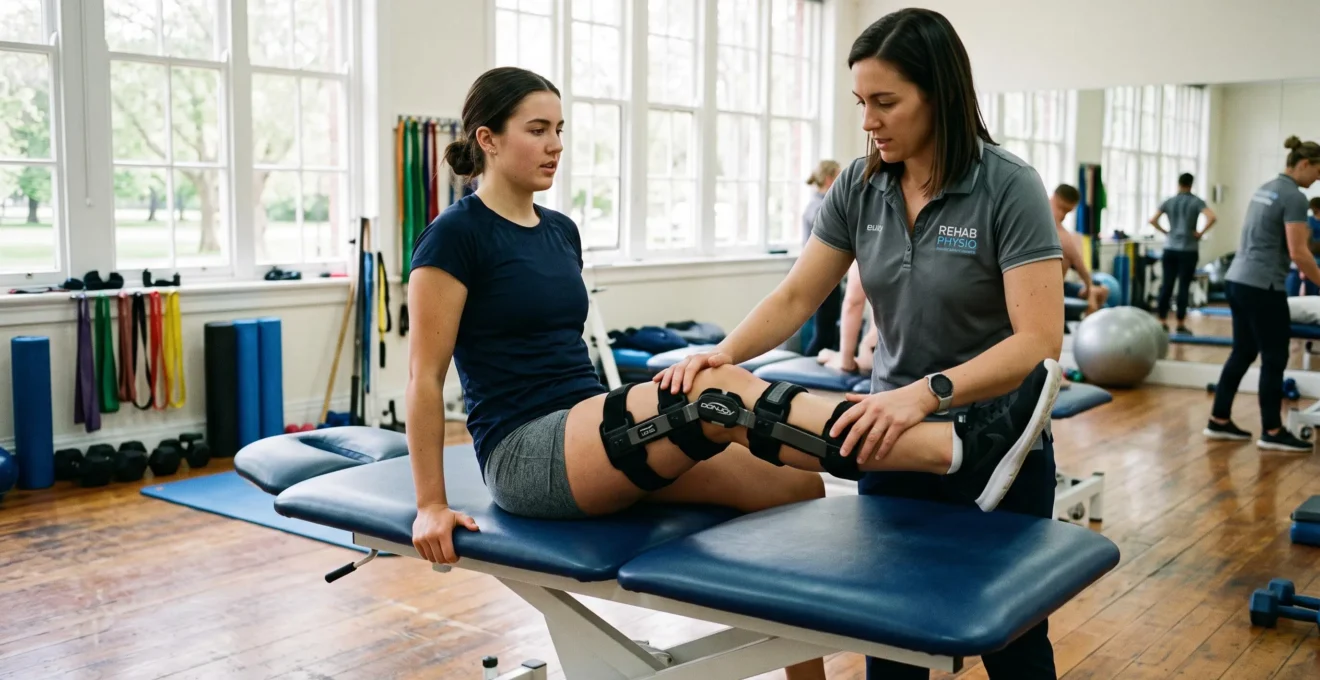
The third pillar is post-operative rehabilitation. Before you leave, identify a physiotherapist near home, share the surgeon’s rehabilitation protocol with them, and agree on the first appointment within days of your return. The same applies to your GP or sports physician, who should be looped in from the start.
- Medical fileMRI, X-rays, previous reports, medication list, allergies, blood group if known.
- Written surgical planType of procedure, graft, length of stay, expected recovery milestones.
- LogisticsFlights, accommodation suitable for reduced mobility, local transport, companion if possible.
- Rehabilitation set up at homePhysiotherapist booked, protocol shared, follow-up appointments in the diary.
- Questions in writingSurgeon’s credentials, number of similar cases per year, complication management, remote follow-up channels.
How do I choose a knee surgeon abroad for an ACL injury?
Look for a surgeon who sub-specialises in knee surgery, performs ACL reconstructions and meniscus repairs regularly, and is willing to review your imaging before you travel. Ask about the type of grafts used, the hospital where they operate, and how post-operative follow-up is organised once you return home.
What happens if complications arise after knee surgery abroad?
A clear international pathway anticipates this. You should have direct contact details for the surgical team, a protocol for warning signs such as fever, calf pain or sudden swelling, and a local referring doctor or physiotherapist informed from the start. In case of a serious issue, local emergency services in your country are the first point of contact, with the surgical team involved in parallel.
Is ACL reconstruction abroad safe for a return to sport?
The surgery itself follows the same technical standards worldwide. Safety for return to sport depends more on the surgeon’s experience, the quality of rehabilitation and your own compliance with the protocol than on the country where the operation takes place. Return-to-sport timelines vary and are decided by the surgeon and physiotherapist based on objective tests, not fixed deadlines.
Can I combine ACL reconstruction and meniscus repair in a single operation?
Yes, when both lesions are present and the meniscus tear is suitable for repair, surgeons often perform the two procedures during the same arthroscopy. This limits the number of operations and allows the meniscus repair to heal in a stabilised knee.
If you have a sports-related ACL or meniscus injury and want to understand whether a structured pathway abroad fits your situation, the next sensible step is to have your imaging and medical history reviewed by a specialised knee surgeon before making any decision.